Floss Sticks vs. Picks vs. Floss: Which Is Best for Your Teeth?
Keeping the spaces between your teeth clean is just as important as brushing, yet most people spend less than 30 seconds thinking about which tool to use. Walk into any pharmacy and you'll face a wall of options — traditional string floss, floss picks, floss sticks, and interdental brushes. Each claims to be the best. So which one actually is? This guide breaks down the real differences so you can make a smart, informed choice for your smile.
What Are Dental Floss Sticks, Floss Picks, and Traditional Floss?
Before comparing, it helps to understand exactly what each product is — because the terms "floss stick" and "floss pick" are often used interchangeably, yet they can refer to slightly different designs.
Traditional String Floss
This is the classic product — a long strand of nylon or PTFE (polytetrafluoroethylene) thread that comes on a spool inside a small dispenser. You wind a length around your fingers and manually guide it between each tooth. It comes in waxed, unwaxed, flavored, and tape varieties.
Floss Picks (F-Shaped or Y-Shaped)
A floss pick is a small plastic handle with a short segment of floss stretched across a forked or arched end. The most common shape is a "Y" or "F" design. The pick end on the opposite side can be used to dislodge food particles. These are single-use, portable, and popular with children and adults who find finger-wrapping floss difficult.
Floss Sticks
The term "floss stick" typically refers to the same category as floss picks — a handle with a floss segment — though some brands use "floss stick" to describe a longer wand-style handle, making it easier to reach back molars. In many markets, dental floss sticks and floss picks are sold interchangeably, so always check the shape and design on the packaging.
How Each Tool Cleans Your Teeth
The mechanics of cleaning matter more than most people realize. Understanding how each tool works helps explain why dentists often have strong preferences.
Traditional string floss allows you to wrap the floss into a "C-shape" around each tooth and slide it gently beneath the gumline. This curved motion effectively removes plaque from the sides of teeth and from just below the gum pocket — the area where gum disease begins. Because you use a fresh section of floss for each tooth, you're not spreading bacteria from one gap to another.
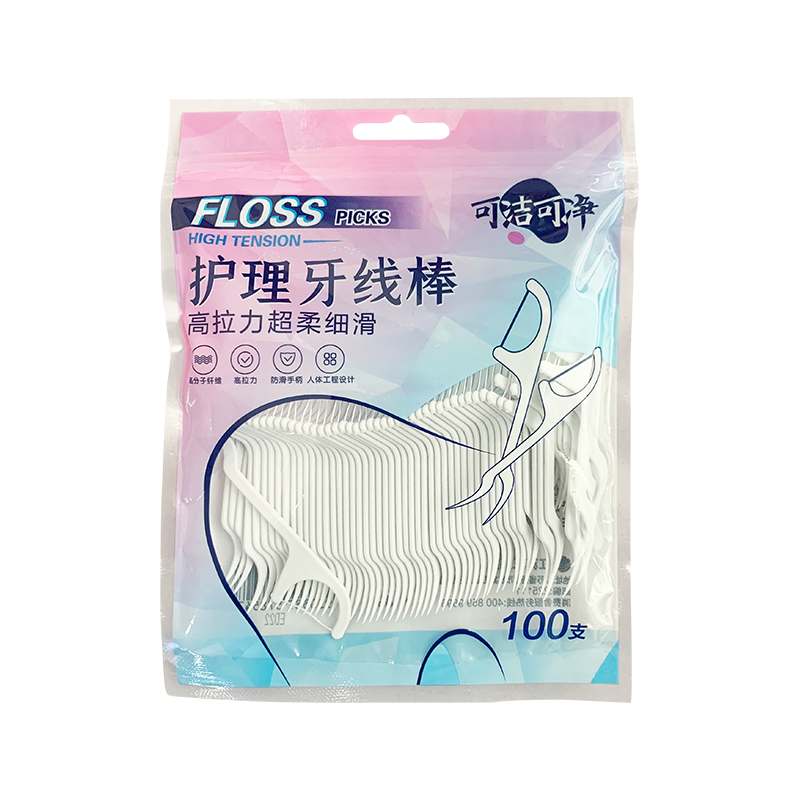
Floss picks and sticks use a fixed segment of floss that cannot be re-angled as easily. The small amount of floss between the prongs limits your ability to form that C-shape. Additionally, the same piece of floss is dragged across all teeth without replacement, which can redistribute plaque and bacteria throughout the mouth. That said, they still remove debris and stimulate gum tissue — making them significantly better than no flossing at all.
Pros and Cons: A Side-by-Side Comparison
Here's a clear breakdown of how these tools stack up against each other across the most important factors:
| Feature | String Floss | Floss Picks/Sticks |
| Plaque Removal | Excellent | Good |
| Gumline Access | Deep | Moderate |
| Ease of Use | Moderate (requires dexterity) | Very Easy |
| Portability | Good | Excellent |
| Hygiene | High (fresh floss each tooth) | Lower (same segment reused) |
| Rear Molar Access | Challenging for some | Easier with wand handle |
| Environmental Impact | Lower plastic usage | More plastic waste |
| Cost | Very affordable | Moderate |
Who Should Use Which Tool?
There's no universal answer — the right tool depends on your lifestyle, dental anatomy, and personal habits. Here's a practical guide to help you match the tool to your needs:
Choose String Floss If:
- You have healthy gums and want the most thorough clean possible
- Your dentist has flagged early signs of gum disease or heavy plaque buildup
- You floss daily at home and have time to do it properly
- You are environmentally conscious and want to minimize plastic waste
- You have braces or bridgework (use a floss threader alongside string floss)
Choose Floss Picks or Sticks If:
- You have limited hand mobility or arthritis that makes string floss difficult
- You're just building the habit of flossing and need something quick and simple
- You frequently floss on the go — at work, during travel, or after meals
- You're helping a child learn to floss independently
- You struggle to reach your back molars with string floss
Common Mistakes People Make When Using These Tools
Even with the right tool, poor technique reduces effectiveness significantly. These are the most frequent errors to avoid:
- Snapping the floss into the gums. Whether using string or a pick, forcing the floss downward aggressively can cut gum tissue and cause bleeding. Always slide gently in a zigzag motion.
- Skipping the C-shape with string floss. Many people just pop the floss in and out without curving it around the tooth. The C-shape is what actually scrapes the tooth surface clean.
- Reusing a floss pick without rinsing. If you use the same pick for your entire mouth, rinse it thoroughly between teeth at minimum to reduce bacterial transfer.
- Flossing only when you feel food stuck. Flossing removes plaque, not just food. Plaque has no sensation — it builds silently until it hardens into tartar.
- Stopping because of bleeding. Light bleeding when you start flossing often means your gums are inflamed from lack of cleaning, not that flossing is harmful. Consistent daily flossing usually resolves this within one to two weeks.
The Role of Dental Floss Sticks in Building a Consistent Habit
Dental professionals agree on one fundamental truth: the best flossing tool is the one you will actually use consistently. A 2019 study published in the Journal of Clinical Periodontology found that floss pick users were significantly more likely to floss daily compared to those using string floss, simply because of the convenience factor. And daily use — even with a slightly less effective tool — produces better long-term oral health outcomes than occasional use of a superior product.
This makes floss sticks and picks especially valuable as entry points. Many dentists now recommend starting patients on picks to establish the habit, then gradually transitioning to string floss once the routine is locked in. If you've been skipping flossing entirely because string floss feels awkward or time-consuming, switching to a floss stick is a meaningful improvement worth making today.
What to Look for When Buying Dental Floss Sticks
If you've decided that floss sticks are the right choice for your routine, here's what to look for on the label and in the design:
- Floss type: Look for high-stretch or shred-resistant floss, especially if your teeth have tight contact points where floss tends to break.
- Handle length: A longer wand handle (sometimes called a "comfort grip" design) makes it much easier to floss rear molars without straining your wrist.
- Waxed vs. unwaxed: Waxed floss on sticks slides more easily between tight teeth. Unwaxed can feel more thorough but may shred more easily.
- Pick tip: A firm but smooth toothpick end is useful, but avoid overly sharp tips that can damage gum tissue if used with pressure.
- ADA Seal of Acceptance: Products carrying this seal have been independently tested and verified for safety and efficacy.
The Bottom Line: Make a Choice and Stick With It
String floss remains the gold standard for thorough interdental cleaning, and if you have the technique and discipline to use it daily, it's the top recommendation from most periodontists. But floss sticks and picks are genuinely effective, far more practical for many people, and a realistic solution for anyone who has struggled to make flossing a regular part of their day.
The worst choice is not choosing at all. Skipping interdental cleaning entirely allows plaque to harden into tartar within 24 to 72 hours — a substance that only professional cleaning can remove. Pick up whichever tool feels most manageable, learn the correct technique, and use it every single day. Your gums will show the difference within weeks, and your dentist will notice within months.